
Recent Posts






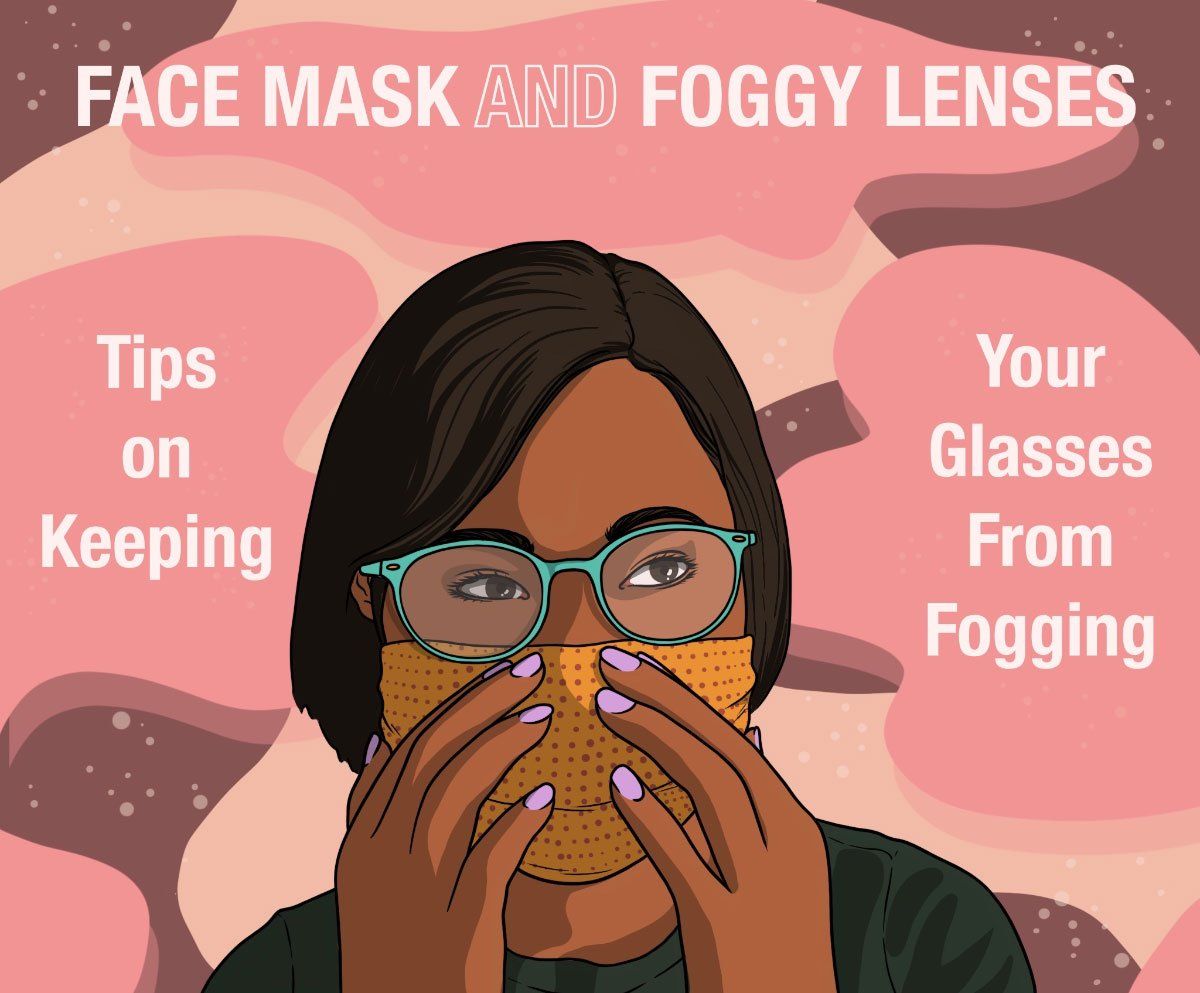
Face Mask and Foggy Lenses – Tip on Keeping Your glasses from Fogging
By: Sabrina Charrier, OD, FAAO
If you wear glasses and live in Texas, I have no doubt you’ve experience the all too familiar fogging up of lenses when you walk outside. Now, thanks to a little ol’ pandemic, we get to have that fun experience at any time. As your hot breath meets the cool lenses, the same kind of condensation occurs. Here are a few suggestions to help alleviate this problem.
1. Tighten the mask fit around your nose and cheeks to ensure a proper fit. This is especially easy if there is a metal part on the mask.
2. Fold the edge down of your mask down. The fold will help divert the air flow as well as tighten the fit around your nose. If there is a metal clip, this may not be possible and this will shorten the covered area.
3. Placing a folded tissue at the bridge of your nose may also be another option to divert air flow. It may also absorb some of the moisture. Be sure to have it in the correct position to avoid having readjust and touch your face and mask.
4. Place medical tape at the top of your mask. This will prevent any air from escaping from the top of the mask. Use with caution as this may cause irritation to the gentle skin under your eyes.
5. Wash with soap and water and let air dry or gently pat dry with a soft cloth. The soap will create a surfactant layer that will help prevent the condensation. This may need to be repeated several times through the day.
6. Commercial anti-fog spray. The concept is similar to the soap and water method and there are several brands on the market. What is important to know is that several reapplications may still be necessary and the spray itself can be irritating to your eyes.
Hopefully, some of these tips can help you as we adjust to our new normal. And please remember to wash hands frequently, maintain social distancing, and not touch the outside of your mask to remove it.