
Recent Posts





UV Protection & Sunglasses
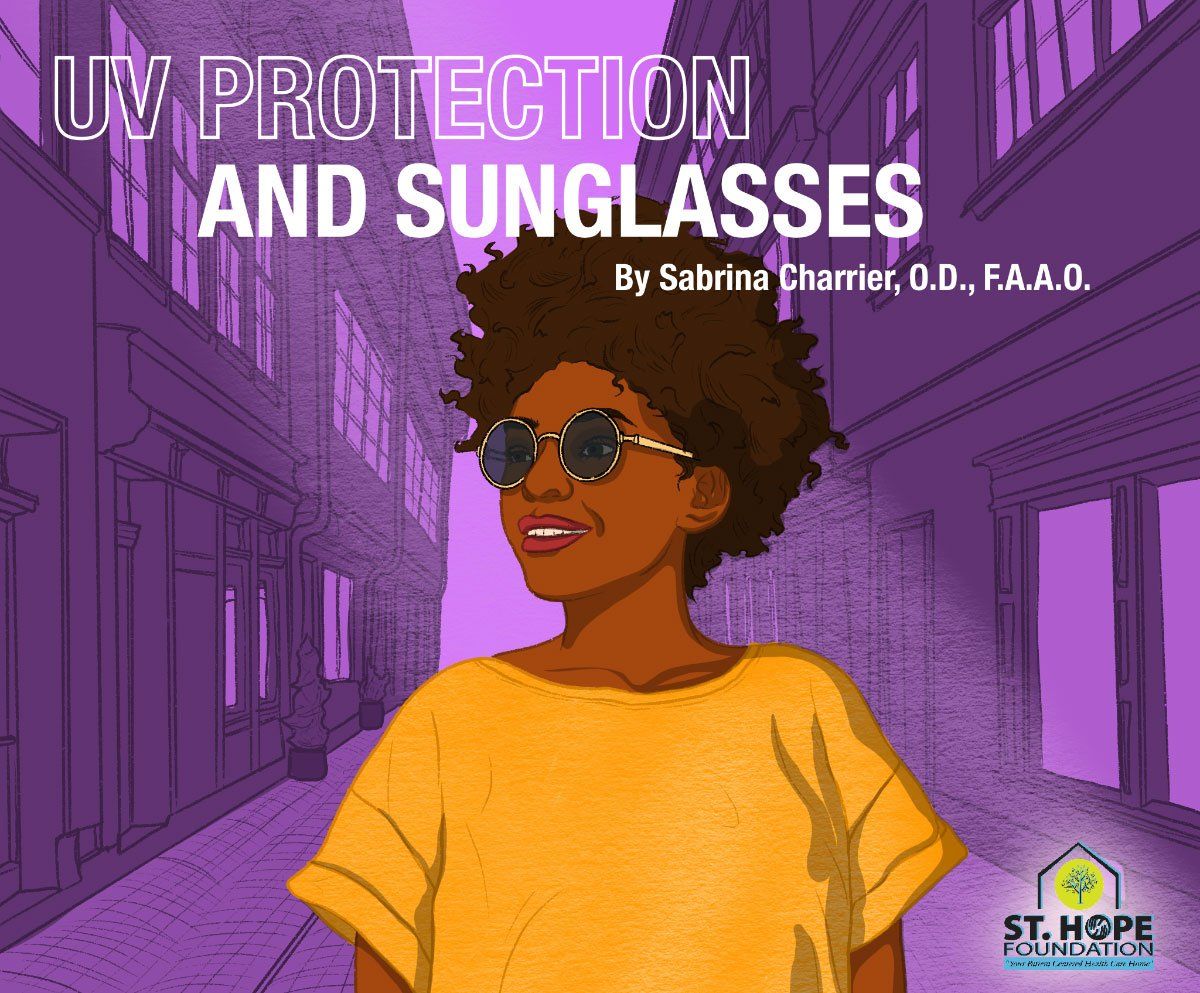
Written by: Sabrina Charrier, OD, FAAO.
Summer is in full swing and we want to make sure you’re keeping your eyes safe from the sun and harmful UV rays!
Why UV Rays are bad
Just like most things in life, too much of a good thing, like sunlight, can cause its problems. Intense sunlight (or even light from welding) can cause a problem called photokeratitis. It’s basically a sunburn on your eyes. The surface of the eye can get really rough causing pain and irritation, light sensitivity, tearing, and blurry vision. It’s usually temporary and rarely causes permanent damage to the eyes. A pinguecula is a tissue elevation on the white part of the eye and a pterygium is a pink triangular overgrowth that starts on the conjunctiva and continues onto the cornea. It is caused by long term harmful UV rays. It is often slow growing but can severely interfere with vision. Many studies have shown that UV radiation can cause problems inside of your eyes as well.
This includes cataracts and macular degeneration. Cataracts are the clouding and hardening of the clear lens inside of your eyes. Macular Degeneration is a deterioration in the retina. It can cause you to lose your central vision.
How you can protect your eyes
Wear your sunglasses! Make sure you are protecting your eyes with UV protection. You want to have 99% to100% of UVA and UVB rays blocked by your sunglasses. Gray is the best color in regards to not affecting your color recognition and have them screen out 75 to 90% of visible light. Wear prescription glasses? Not a problem. We can make them for you in your prescription as well. Polarized lenses offer even more protection as they eliminate glare from cars and water surfaces.
Minimize the time spent in the sun in the hours that are the brightest during the day. Usually this is midmorning to late afternoon, around 10am to 4pm. The hottest time of the day is 3pm.
Wear hats, especially wide brimmed. Now is the time to bust out anything that can give you some more shade over your eyes and skin.
Don’t forget to keep your skin safe as well and wear sunscreen! Contact us or schedule your exam if you have any questions or would like to know your options for sun protection for your eyes.